
Fastener Torque Reference

Torque Reference Chart: Metric And SAE Bolt Torque Specs

This torque reference chart is a quick lookup for common metric and SAE fastener sizes, showing dry and oiled torque ranges alongside familiar bolt-strength grades. It is a practical reference for maintenance, repair, chassis work, and bearing-adjacent service where fastener torque matters, but it should never override the vehicle or equipment manufacturer specification for the exact application.

How To Use This Torque Chart

The XRF torque reference chart covers two common fastener systems in one place: metric bolts under ISO 898 and inch-series bolts under SAE J429. It is useful when a technician needs a quick baseline for dry or lightly oiled fasteners while checking a repair plan, cross-checking a shop reference, or reviewing replacement hardware during chassis and wheel-end work.

Torque charts are reference tools, not final authority. The correct torque for a bearing-related repair, hub job, steering component, suspension fastener, or other critical assembly still comes from the vehicle or equipment manufacturer, especially where clamp load, thread condition, coatings, re-use limits, and tightening sequence affect the result.
What This Chart Covers

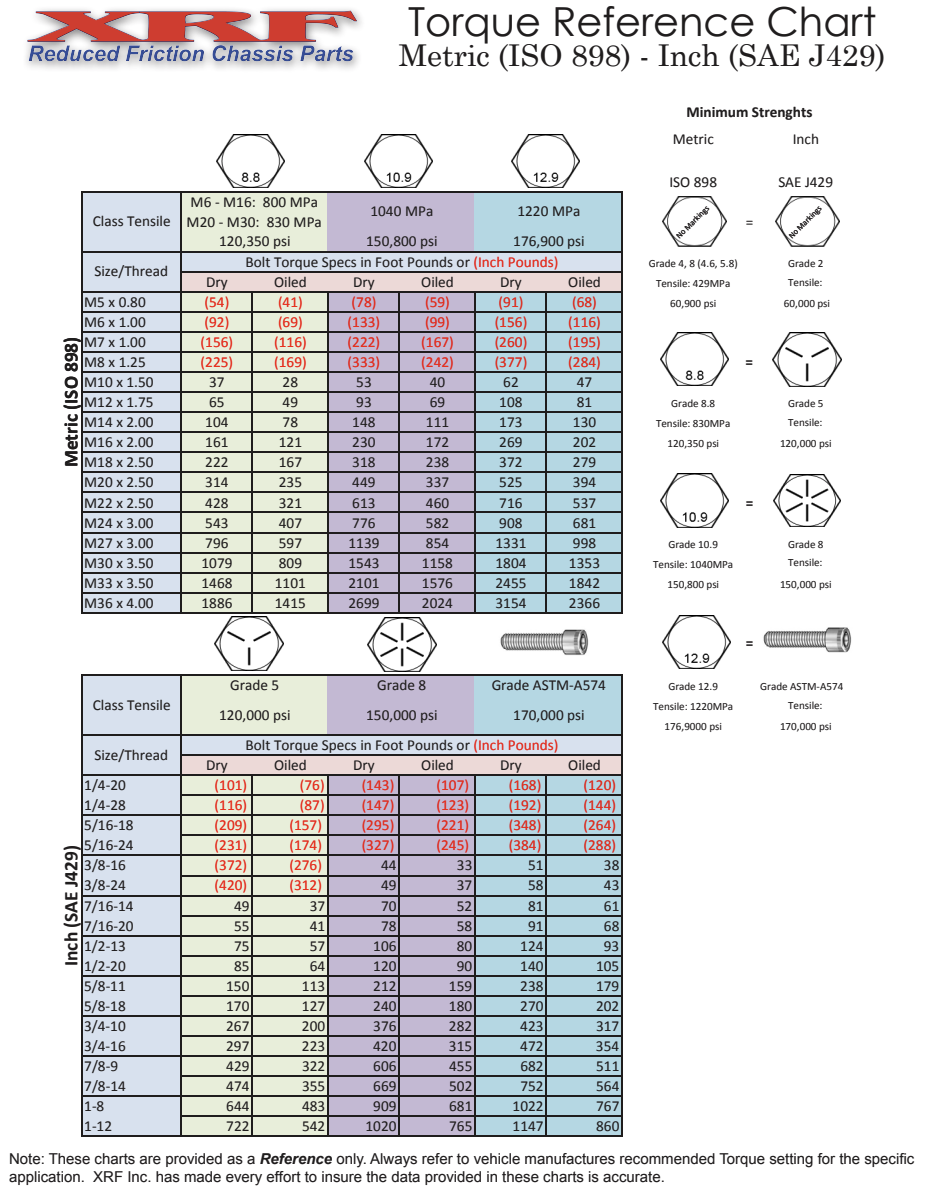
  • Metric bolt torque reference values for common ISO 898 sizes from M5 through M36.
  • Inch bolt torque reference values for common SAE J429 sizes from 1/4-20 through 1-12.
  • Dry and oiled torque comparisons so technicians can avoid treating lubricated threads like dry threads.
  • Common grade-strength comparisons including metric 8.8, 10.9, and 12.9 plus SAE Grade 2, Grade 5, Grade 8, and ASTM-A574.
  • A quick visual reference for maintenance, repair, chassis, wheel-end, and general service work.
  • A clear reminder that OE or manufacturer torque specifications override reference-chart values for the actual application.

Torque Chart Image

This chart image provides the quick-reference bolt torque values and strength-grade comparison in one visual lookup table.

XRF torque reference chart showing metric ISO 898 and inch SAE J429 dry and oiled bolt torque specifications with common fastener strength grades.
XRF quick-reference torque chart for common metric and SAE fastener sizes, dry vs. oiled torque values, and grade comparisons.

Reference Files

Download the original reference material used for this page.

Practical Torque-Chart Notes

Use the chart to orient the job quickly, then confirm the final tightening method and exact specification for the equipment you are servicing.

Start with size, thread, and grade

Read the exact fastener size and thread pitch first, then confirm the bolt grade or class before using any torque table value. A torque number that fits the thread but not the strength grade can under-clamp or over-stress the fastener.

Do not mix dry and lubricated torque values

This chart separates dry and oiled torque because lubrication changes friction and clamp load. If the threads are lubricated, plated, coated, or assembled with anti-seize, do not default to a dry-torque figure unless the manufacturer specifically says to do that.

Use reference charts carefully on wheel-end and chassis work

General torque charts are useful during chassis, steering, suspension, and bearing-adjacent service, but many wheel-end and driveline fasteners use application-specific torque-and-angle procedures, replacement hardware rules, or staged tightening sequences that matter more than a generic chart.

When the OEM spec and the chart differ, follow the OEM

The PDF itself notes that the data is reference-only. That is the right approach: if the vehicle manufacturer, bearing manufacturer, or equipment builder publishes a specific torque value, tightening sequence, or one-time-use hardware requirement, that specification should control the repair.

Try A Search

Start with exact part numbers, known interchange numbers, or the brand plus part number.

Need Help?

Use part numbers first. Ask for quote help when the fitment, dimensions, or interchange are not clear.

Search by exact part number

Use the catalog when you already have the bearing, seal, or OEM number.

Request alternates or quantity pricing

Use the quote form when you need substitute brands, confirmation, or larger-order pricing.

Need dimensional or application help?

Call 877-929-7280 or include notes and files in the quote request.